
Family Card - Person Sheet
Family Card - Person Sheet


Spouses
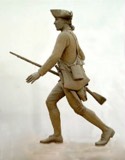
Birth Date1 Sep 1728
Birth PlaceNew Castle, New Castle County, Delaware
Death Date1 Sep 1781 Age: 53
Death PlaceCumberland County, North Carolina
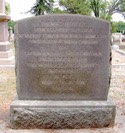
Burial PlaceWilson County, North Carolina, Memorial Cemetery
OccupationRevolutionary War Soldier?, Killed During Revolutionary War
FatherJoshua Lindley HADLEY Sr. , 534 (1703-1760)
MotherMary ROWLAND , 535 (1706-1733)
Family ID8524
Marr Date30 Nov 1750
Notes for Thomas (Spouse 1)
The Quaker family lines of Mary A. Williams Walters
Simon Hadley came to America from Kings county, Ireland where he was born 1675. Came to Chester county PA 1712 and died there 1756. The Delaware boundary drawn in 1754 passed through his property, placing his home and official residence in New Castle county Delaware but leaving most of his holdings in PA. His home built 1717 was still standing in 1961 and was occupied. It was near Hockessin, Delaware.
His grandson, Thomas Hadley, son of Joshua and Patience Brown Hadley was a captain in the Revolution. He lived Fayetteville NC. He was killed in his home by Tory raiders. He was buried on the premises, but in 1935 his body was removed to Memorial Cemetery, Wilson, North Carolina.
——————————————————
Some notes have Thomas Hadley Killed During Revolutionary War.
————————————————
The following is quoted from the Hadley genealogy by Curtis Healton, the volume entitled DESCENDANTS OF THOMAS HADLEY AND MARY THOMPSON:
FIRST GENERATION
4-20. THOMAS HADLEY, s of Joshua and Mary (Rowland) Hadley (p 21), was b in 1728,
New Castle Co, Del, d 1 Sept 1781.
He m., 6-13-1750 at London Grove Mtg, Pa, Mary Thompson, b 1730, Chester Co, Pa, d
1795, dau of John and Jane (Davis) Thompson.
Thomas probably moved to Va with his father. Shortly after his marriage to Mary
Thompson, he purchased land in Augusta (now Botetourt) Co, Va. The following items,
taken from Chalkey's "Records of Augusta County, Virginia", show some of his land
transactions:
"1750 Aug. 29. Deed Book 2, Page 854.-- Benj. Borden etc to Joshua Hadley 345 acres,
part of 2880 acres on Catabo Creek. Patented by Benj. Sr. 19th March 1740.
Page 866. Some to Thomas Hadley on Catuba Creek 334 acres, part of above
patent." The following year, Thomas sold 184 acres of this tract to his brotherin-
law, John Marshall.
"1752 May 20. Deed Book 4, Page 253. -- Borden to Thomas Hadley 399 acres of 2880
patented 9th March 1750. Catuba Creek at James."
"1753 Dec. 12. Deed Book 6, Page 22.-- Joshua Hadley and Patience to Thomas
Hadley, 400 acres in fork of James River and Craig Creek. Teste: Edward
McDonald. Delivered to Wm. Preston."
"1764 Nov. 12. Deed Book 11, Page 730. -- Thomas Hadley and Mary of Cumberland
County, N.C. to George Poage, £ 140, 400 acres in fork of James River and
Craig's Creek. Teste: Henry Carter."
"1764 Nov. 13. Deed Book 11, Page 731. -- Thomas Hadley to James Rowland, £ 130, 549
acres on Catawba Creek; corner in the Great Patent line and a small tract
belonging to William Preston, Mount Hadley -first surveyed in two tracts and
conveyed to Thomas Hadley by Borden. Delivered: Francis Smith, March Court,
1762."
The turbulent lives of Thomas Hadley and his descendants differs so greatly from the
tranquil existence of their Quaker cousins that it seems next to impossible that they had the
same origins and were reared in the same environments. What was the contributing factor?
Could it be an inherited temperament from their mother?
Thomas did not remain long in Virginia. In 1760, he, with a partner, John Wilcox, were
the first merchants of Cross Creek (now Fayetteville), in Cumberland Co, NC. He represented
his district at the Constitutional Convention at Halifax, NC, in Nov. 1776, which enacted a Bill
of Rights for the new Government. He was elected sheriff of Cumberland Co, NC, in 1778,
and re-elected in 1781 but was killed before he could serve his last term.
Thomas, his sons Joshua and Simon, and his son-in-law, Patrick Travis, were very active
in the American Revolution. All were Captains of Militia.
The Revolutionary War in NC was a dirty affair. While few major battles were fought
there, there was constant guerilla warfare which did not subside until long after the surrender
at Yorktown. As in the border states during the Civil War, communities were pitted against
communities, neighbor against neighbor, and brother against brother. In one respect, it
appears to have been a war between English and Irish Whigs who, in Cumberland Co, were
seriously outnumbered by the Scotch Tories under the leadership of a Col. Hector McNeill.
Cross Creek was captured by the Tories in Aug 1781, and the Whig families were
compelled to Seek refuge elsewhere. Thomas Hadley was at the battle of Cross Creek and his
family was staying at his home on the banks of the Cape Fear River, eleven miles north of the
town, and almost due east of the present site of Fort Bragg. The house was still standing in
1916. After the battle, Thomas went alone to visit his family there. The events that followed
was described by Reverend Caruthers in his book: "Incidents of the Revolutionary War."
I quote:
"Early in the Fall of 1781, Thomas Hadley was killed in a rather singular manner, by the
Tories to whom he made himself obnoxious, the Scotch say, by his severities. He lived on the
Cape Fear River opposite to the mouth of Carver's Creek, in what was then termed a 'high
roofed house', by which, I suppose was meant a house with a steep roof and attic windows.
About a dozen Tories, being apprised that he was at home, having just returned from a tour
of some kind, probably against their party, went there one night with a determination to take
his life. The night was intensely dark; but that may have been favorable to their design.
When the Tories surrounded his house, Captain Hadley barricaded his doors in the best way
he could, ran upstairs, and putting his head out of a window, called for Frank Cooley and
Andrew Beard to bring up their men; but this stratagem had been practiced so often by both
parties that it was now disregarded by the assailants. Cooley and Beard were not on the
premises with men to bring up; or if they had been there the Tories knew they could elude
them in the dark. The Tories instead of being at all disconcerted, only felt assured they had
nothing to fear and were determined on entering the house, but while they were making
preparations, as Hadley kept his head out of the window, giving directions to Cooley and
Beard, a little Scotsman by the name of McAlpin took it into his head that he would shoot at
the voice. When the gun was fired, the ball struct Hadley about the lower jaw and passing
diagonally through his head, lodged in some timbers above. A tuft of hair, carried by the ball,
stuck in the edge of the hole made by the bullet, and remained there many years.
Hadley had four sons, of whom all escaped under cover of the night except Benjamin, or
Ben as he was called. The Tories took him to 'Gray's Pocosin', five or six miles off, stripped
him, tied him to a tree on an island in the pocosin, which was afterwards called "Hadley's
Island," and there let the swarms of insects of every kind prey upon him." End of quote.
The guerillas then proceeded to loot the home. All of the silverware was carried off,
except one pair of sugar tongs which were dropped in the confusion. The daughter Mary
recovered them and when last known, they were prized possession of her descendant Thomas
Hadley Tyson.
The attitude of the McNeills and other Scots is well described by Reverend Caruthers who
quotes an Archibald McLean as follows:
"The Hadleys, with a few others, if they could only hear of a Scotsman having anything of
value, from a good negro down to a cooking pot, according to their moral code, constituted a
right to it. This state of things continuing for a length of time, same of those (Tories) lying out
in the islands of the swamp below Flea Hill, formed a plan of taking them by surprise at night.
They were unsuccessful, but the aged father was found, shot down and run through by a
sword for fear life was not extinct. The father was regarded as the recipient of stolen
property and responsible for the conduct of his sons.
The young Hadleys went to the McLean house after learning that they were implicated in
the death of their father, some time after the close of the war, with some friends. They came
to the McLean house and attempted to shoot two of the men whom they suspected. The first man, as one of the Hadley brothers raised his
gun to kill him, seized the muzzle of the gun and the discharge lacerated the hand of one of
the Hadley brothers.
I afterwards had the pleasure of seeing one of the Hadleys cropped on a conviction of
stealing.," End of quote.
Perhaps Thomas Hadley's son who was convicted as a thief was just that. There is also
a possibility that he was acting under the direction of his brother-in-law, Patrick Travis.
Undoubtedly any jury which had been subjected to the Acts of Confiscation would have a
very low regard for anyone participating in the confiscation. The provisional government
of North Carolina passed an 'Acts of Confiscation' designed to deprive all opponents to the
Revolution of their property to compensate for Tory raids. Several Lindleys, descendants
of Ruth Hadley and Thomas Lindley, were victims of these acts.
Mr. David McNeill is (1965) a local historian of that area. He states positively that the
name of the man who fired the fatal bullet, killing Thomas Hadley, was McPhail, not
McAlpin. He also recounts a rather interesting sequel to these events:-- A close friend
named Campbell swore vengeance for Hadley's murder and, each Sunday, carried his rifle
to church with the announced intention of killing McPhail who apparently concluded that
there were healthier places to live. He disappeared from the community and was never
heard of again.
Thomas was buried on his River Plantation. His wife was later buried beside him. Here
they remained for 150 years and more. The plantation had long since passed out of the
Hadley families' possession, the markers were broken, the graves sadly neglected when,
about 1935, Mrs. Mattie Hadley Woodard had the remains removed to her family plot in
Maplewood Cemetery, Wilson, N.C. A granite marker was erected on the site bearing the
inscription:
THOMAS HADLEY
1728 1781
Member of Convention which framed the Constitution
of North Carolina, 1776
Captain of North Carolina Militia in American Revolution
Fell in defense of his country's independence
His Wife
MARY THOMPSON
1730 1795
ALL THE QUAKER HADLEYS, with revisions. An unpublished compilation of works by Harlan Hadley, Lyle Hadley, and Wallace Hadley, pt II, Chap 1. Found in Hadley Society Files. Transcribed by Terry McLean, March 2000.
BURIAL: Buried originally River Plantation, reburied 1935 Maplewood Cemetery, Wilson, NC.
On Find A Grave. There is much more listed there.
——————
Simon Hadley came to America from Kings county, Ireland where he was born 1675. Came to Chester county PA 1712 and died there 1756. The Delaware boundary drawn in 1754 passed through his property, placing his home and official residence in New Castle county Delaware but leaving most of his holdings in PA. His home built 1717 was still standing in 1961 and was occupied. It was near Hockessin, Delaware.
His grandson, Thomas Hadley, son of Joshua and Patience Brown Hadley was a captain in the Revolution. He lived Fayetteville NC. He was killed in his home by Tory raiders. He was buried on the premises, but in 1935 his body was removed to Memorial Cemetery, Wilson, North Carolina.
——————————————————
Some notes have Thomas Hadley Killed During Revolutionary War.
————————————————
The following is quoted from the Hadley genealogy by Curtis Healton, the volume entitled DESCENDANTS OF THOMAS HADLEY AND MARY THOMPSON:
FIRST GENERATION
4-20. THOMAS HADLEY, s of Joshua and Mary (Rowland) Hadley (p 21), was b in 1728,
New Castle Co, Del, d 1 Sept 1781.
He m., 6-13-1750 at London Grove Mtg, Pa, Mary Thompson, b 1730, Chester Co, Pa, d
1795, dau of John and Jane (Davis) Thompson.
Thomas probably moved to Va with his father. Shortly after his marriage to Mary
Thompson, he purchased land in Augusta (now Botetourt) Co, Va. The following items,
taken from Chalkey's "Records of Augusta County, Virginia", show some of his land
transactions:
"1750 Aug. 29. Deed Book 2, Page 854.-- Benj. Borden etc to Joshua Hadley 345 acres,
part of 2880 acres on Catabo Creek. Patented by Benj. Sr. 19th March 1740.
Page 866. Some to Thomas Hadley on Catuba Creek 334 acres, part of above
patent." The following year, Thomas sold 184 acres of this tract to his brotherin-
law, John Marshall.
"1752 May 20. Deed Book 4, Page 253. -- Borden to Thomas Hadley 399 acres of 2880
patented 9th March 1750. Catuba Creek at James."
"1753 Dec. 12. Deed Book 6, Page 22.-- Joshua Hadley and Patience to Thomas
Hadley, 400 acres in fork of James River and Craig Creek. Teste: Edward
McDonald. Delivered to Wm. Preston."
"1764 Nov. 12. Deed Book 11, Page 730. -- Thomas Hadley and Mary of Cumberland
County, N.C. to George Poage, £ 140, 400 acres in fork of James River and
Craig's Creek. Teste: Henry Carter."
"1764 Nov. 13. Deed Book 11, Page 731. -- Thomas Hadley to James Rowland, £ 130, 549
acres on Catawba Creek; corner in the Great Patent line and a small tract
belonging to William Preston, Mount Hadley -first surveyed in two tracts and
conveyed to Thomas Hadley by Borden. Delivered: Francis Smith, March Court,
1762."
The turbulent lives of Thomas Hadley and his descendants differs so greatly from the
tranquil existence of their Quaker cousins that it seems next to impossible that they had the
same origins and were reared in the same environments. What was the contributing factor?
Could it be an inherited temperament from their mother?
Thomas did not remain long in Virginia. In 1760, he, with a partner, John Wilcox, were
the first merchants of Cross Creek (now Fayetteville), in Cumberland Co, NC. He represented
his district at the Constitutional Convention at Halifax, NC, in Nov. 1776, which enacted a Bill
of Rights for the new Government. He was elected sheriff of Cumberland Co, NC, in 1778,
and re-elected in 1781 but was killed before he could serve his last term.
Thomas, his sons Joshua and Simon, and his son-in-law, Patrick Travis, were very active
in the American Revolution. All were Captains of Militia.
The Revolutionary War in NC was a dirty affair. While few major battles were fought
there, there was constant guerilla warfare which did not subside until long after the surrender
at Yorktown. As in the border states during the Civil War, communities were pitted against
communities, neighbor against neighbor, and brother against brother. In one respect, it
appears to have been a war between English and Irish Whigs who, in Cumberland Co, were
seriously outnumbered by the Scotch Tories under the leadership of a Col. Hector McNeill.
Cross Creek was captured by the Tories in Aug 1781, and the Whig families were
compelled to Seek refuge elsewhere. Thomas Hadley was at the battle of Cross Creek and his
family was staying at his home on the banks of the Cape Fear River, eleven miles north of the
town, and almost due east of the present site of Fort Bragg. The house was still standing in
1916. After the battle, Thomas went alone to visit his family there. The events that followed
was described by Reverend Caruthers in his book: "Incidents of the Revolutionary War."
I quote:
"Early in the Fall of 1781, Thomas Hadley was killed in a rather singular manner, by the
Tories to whom he made himself obnoxious, the Scotch say, by his severities. He lived on the
Cape Fear River opposite to the mouth of Carver's Creek, in what was then termed a 'high
roofed house', by which, I suppose was meant a house with a steep roof and attic windows.
About a dozen Tories, being apprised that he was at home, having just returned from a tour
of some kind, probably against their party, went there one night with a determination to take
his life. The night was intensely dark; but that may have been favorable to their design.
When the Tories surrounded his house, Captain Hadley barricaded his doors in the best way
he could, ran upstairs, and putting his head out of a window, called for Frank Cooley and
Andrew Beard to bring up their men; but this stratagem had been practiced so often by both
parties that it was now disregarded by the assailants. Cooley and Beard were not on the
premises with men to bring up; or if they had been there the Tories knew they could elude
them in the dark. The Tories instead of being at all disconcerted, only felt assured they had
nothing to fear and were determined on entering the house, but while they were making
preparations, as Hadley kept his head out of the window, giving directions to Cooley and
Beard, a little Scotsman by the name of McAlpin took it into his head that he would shoot at
the voice. When the gun was fired, the ball struct Hadley about the lower jaw and passing
diagonally through his head, lodged in some timbers above. A tuft of hair, carried by the ball,
stuck in the edge of the hole made by the bullet, and remained there many years.
Hadley had four sons, of whom all escaped under cover of the night except Benjamin, or
Ben as he was called. The Tories took him to 'Gray's Pocosin', five or six miles off, stripped
him, tied him to a tree on an island in the pocosin, which was afterwards called "Hadley's
Island," and there let the swarms of insects of every kind prey upon him." End of quote.
The guerillas then proceeded to loot the home. All of the silverware was carried off,
except one pair of sugar tongs which were dropped in the confusion. The daughter Mary
recovered them and when last known, they were prized possession of her descendant Thomas
Hadley Tyson.
The attitude of the McNeills and other Scots is well described by Reverend Caruthers who
quotes an Archibald McLean as follows:
"The Hadleys, with a few others, if they could only hear of a Scotsman having anything of
value, from a good negro down to a cooking pot, according to their moral code, constituted a
right to it. This state of things continuing for a length of time, same of those (Tories) lying out
in the islands of the swamp below Flea Hill, formed a plan of taking them by surprise at night.
They were unsuccessful, but the aged father was found, shot down and run through by a
sword for fear life was not extinct. The father was regarded as the recipient of stolen
property and responsible for the conduct of his sons.
The young Hadleys went to the McLean house after learning that they were implicated in
the death of their father, some time after the close of the war, with some friends. They came
to the McLean house and attempted to shoot two of the men whom they suspected. The first man, as one of the Hadley brothers raised his
gun to kill him, seized the muzzle of the gun and the discharge lacerated the hand of one of
the Hadley brothers.
I afterwards had the pleasure of seeing one of the Hadleys cropped on a conviction of
stealing.," End of quote.
Perhaps Thomas Hadley's son who was convicted as a thief was just that. There is also
a possibility that he was acting under the direction of his brother-in-law, Patrick Travis.
Undoubtedly any jury which had been subjected to the Acts of Confiscation would have a
very low regard for anyone participating in the confiscation. The provisional government
of North Carolina passed an 'Acts of Confiscation' designed to deprive all opponents to the
Revolution of their property to compensate for Tory raids. Several Lindleys, descendants
of Ruth Hadley and Thomas Lindley, were victims of these acts.
Mr. David McNeill is (1965) a local historian of that area. He states positively that the
name of the man who fired the fatal bullet, killing Thomas Hadley, was McPhail, not
McAlpin. He also recounts a rather interesting sequel to these events:-- A close friend
named Campbell swore vengeance for Hadley's murder and, each Sunday, carried his rifle
to church with the announced intention of killing McPhail who apparently concluded that
there were healthier places to live. He disappeared from the community and was never
heard of again.
Thomas was buried on his River Plantation. His wife was later buried beside him. Here
they remained for 150 years and more. The plantation had long since passed out of the
Hadley families' possession, the markers were broken, the graves sadly neglected when,
about 1935, Mrs. Mattie Hadley Woodard had the remains removed to her family plot in
Maplewood Cemetery, Wilson, N.C. A granite marker was erected on the site bearing the
inscription:
THOMAS HADLEY
1728 1781
Member of Convention which framed the Constitution
of North Carolina, 1776
Captain of North Carolina Militia in American Revolution
Fell in defense of his country's independence
His Wife
MARY THOMPSON
1730 1795
ALL THE QUAKER HADLEYS, with revisions. An unpublished compilation of works by Harlan Hadley, Lyle Hadley, and Wallace Hadley, pt II, Chap 1. Found in Hadley Society Files. Transcribed by Terry McLean, March 2000.
BURIAL: Buried originally River Plantation, reburied 1935 Maplewood Cemetery, Wilson, NC.
On Find A Grave. There is much more listed there.
——————