
Family Card - Person Sheet
Family Card - Person Sheet
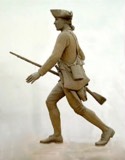
NameJohn HURT 
 26
26
26Birth Date1752
Birth PlacePamplin, Appomattox County, Virginia
Death Date1824 Age: 72
Death PlacePamplin, Appomattox County, Virginia
OccupationRW Soldier Chaplin, Knew Washington, Jefferson & Madison
FatherBenjamin HURT (~1724-1781)
MotherAnne NEWMAN (1730-1818)
Spouses
Birth Date?
Family ID4575
Marr Date15 Mar 1796
Marr PlacePrince Edward County, Virginia
Notes for John HURT
U.S., Sons of the American Revolution Membership Applications, 1889-1970
I do certify that Mr. John Hunt is entitled to the proportion of land Allowed a brigade chaplain of the Continental Line who has served seven years.
Thomas Merriweather
Benjamin Harrison.
A warrant for 7000 acres issued to Mr. John Hunt 13 Jan 1784.
Land Office, Richmond Va.
I hereby certify that the foregoing is a true copy from the records
of this office.
Witness my hand and seal of office this 4th day of September,1908.
John W. Richardson.
Registrar of the Land Office.
https://en.wikipedia.org/wiki/John_Hurt_(chaplain)
John Hurt Episcopal Minister, Revolutionary War Chaplain
From Wikipedia, the free encyclopedia
John Hurt
Born 1752
Vanear, Pamplin, Virginia, U.S.
Died 1824
Prince Edward, Virginia, U.S.
Occupation Episcopal Minister
Nationality American
Period American Revolutionary War and Early American Republic
Notable works The Love of Our Country: A Sermon Preached before the Virginia Troops in New Jersey.
Reverend John Hurt (1752 – 1824) was an American Episcopal minister and army chaplain from the Commonwealth of Virginia. He was the first official United States Army Chaplain.[1]
Personal and family life
Little is known about Hurt's early life. Many of the records of his birth, early education and marriages were destroyed by Union soldiers near the conclusion of the American Civil War.[2] Some genealogical records place bid birth as early as 1738 (six years after George Washington's). However, most historical accounts and genealogical records put it in 1752[3] (three years before Alexander Hamilton's). This confusion is mostly from the Hurt family's reuse of given names over several generations. Some sources list James Hurt and Jane Bickley as parents, while others claim that Jane Bickley died prior to Hurt's birth and instead list Benjamin Hurt and Anne Newman as parents.
What is known about Hurt's early life is that he came from a long line of devout anglicans. Two of his relatives (probably his uncles), Philemon and William Hurt, were also Anglican ministers before the American War of Independence. After the Continental Army's victory, Anglicans in the United States restructured the church. It was renamed the Episcopal church,[4] due to broken ties with England and, by association, the Church of England. Hurt was ordained as a minister in Trinity Parish on December 21, 1774.
After his extensive military service in the revolution as a chaplain, he married Nellie McTaggart of Virginia in 1785. The exact date is disputed. They had two daughters, Martha Patsy and Sarah Elizabeth Hurt. After his wife's death, he married Sallie Franklin. The date of the marriage is disputed, between 1788 and 1796. They had two sons, James and Samuel Jones Hurt.[5] Much like the accounts of his early life, the historical and genealogical records often conflict on the dates and even years of his marriages and births of his children.
Even the exact time of his death is unclear, but most sources agree he died sometime in 1824 in Prince Edward County, Virginia. In all historical accounts of his chaplaincy, it is made clear that little is known about and few records remain of his personal life, and that it is likely to remain a mystery.
Military service
He began his service in the continental army on October 1, 1776. His experience as a minister qualified him to serve as chaplain to the Virginia 6th Infantry Regiment. George Washington desired that every regiment of continental soldiers be assigned a chaplain, but the continental congress at the time due to financial concerns did not authorize the commission of more chaplains. As a result, John Hurt became chaplain to the 4th and 5th Virginia infantry regiments as well. These units were later consolidated on August 18, 1778, into a brigade commanded by General George Weedon. Hurt would become this brigades chaplain and remain so until the end of his service in 1783.[6][7]
As an episcopal minister, his method of preaching stood in contrast to ministers of other denominations. One source cites the difference this way, "While the sermons of presbyterians, congregational and baptist chaplains were clearly outlined giving an exegetical giving the context of the verse used, its theological ramifications, and finally, its immediate application in practicalities of the existential situation, sermons extant from Anglican chaplain border more on the style of highly refined homilies, but lacking contextual explanations."[8] As a soldier he has been described as "the bravest of the brave".[9]
He served alongside his fellow Virginia soldiers in the battles of Trenton, Princeton, Brandywine Creek, Germantown, the encampment at Valley Forge, the battle of Monmouth and the Siege of Charleston. During the Virginia campaign Hurt was used as an intelligence officer for General Baron Von Steuben. He was captured in January 1781 a few months before the battle of Blandford.
Capture
In 1780 General George Washington had agreed with British commander Sir Henry Clinton that all men of both sides that were designated as chaplains were not to be detained as prisoners of war, but were to be immediately released. Despite this, after Hurt's capture in Northern Virginia, he spent several months detained in a British prison barge off the Atlantic coast. The exact duration and location of his imprisonment are unknown. He was later paroled, as was custom, to the city of Norfolk and later the state of Virginia. However, he was still dissatisfied with the conditions of his parole. There is still extant a letter he wrote in September 1781 directly to George which requested Washington's help in canceling his parole, exchanging him for a British chaplain and returning him to active duty. A portion of the letter reads,
"By endeavoring to gain intelligence for the Baron de Steuben last January, I was made a prisoner by a party of Simpcoe's Corps. After suffering the most ignominious treatment at different times onboard different prison Ships about a month ago I had my parole extended from the Town of Norfolk to the State of Virginia there to remain till exchanged or my parole altered. By the information I have had from Col. Tilman with respect to the British Chaplains, I humbly conceive that it is in your Excellency's power to have my parole of honor officially canceled which would add very much to my happiness I conclude also from the above information that I have been unjustly detained and improperly paroled."
General Washington, unfortunately, was unable to help. Washington wrote a response that is housed in the Library of Congress explaining his inability to exchange him but expressed his confusion that he was not being released due to his status as a chaplain.
Much more on Find A Grave. He knew Washington,Thomas Jefferson and James Madison.
—————————
!1. See father's notes
!2. Father's wd 19 Jan 1781, wp 8 Feb 1781, Caroline Co. Will Bk 1734-1830 p 29.
This will names 9 children
I do certify that Mr. John Hunt is entitled to the proportion of land Allowed a brigade chaplain of the Continental Line who has served seven years.
Thomas Merriweather
Benjamin Harrison.
A warrant for 7000 acres issued to Mr. John Hunt 13 Jan 1784.
Land Office, Richmond Va.
I hereby certify that the foregoing is a true copy from the records
of this office.
Witness my hand and seal of office this 4th day of September,1908.
John W. Richardson.
Registrar of the Land Office.
https://en.wikipedia.org/wiki/John_Hurt_(chaplain)
John Hurt Episcopal Minister, Revolutionary War Chaplain
From Wikipedia, the free encyclopedia
John Hurt
Born 1752
Vanear, Pamplin, Virginia, U.S.
Died 1824
Prince Edward, Virginia, U.S.
Occupation Episcopal Minister
Nationality American
Period American Revolutionary War and Early American Republic
Notable works The Love of Our Country: A Sermon Preached before the Virginia Troops in New Jersey.
Reverend John Hurt (1752 – 1824) was an American Episcopal minister and army chaplain from the Commonwealth of Virginia. He was the first official United States Army Chaplain.[1]
Personal and family life
Little is known about Hurt's early life. Many of the records of his birth, early education and marriages were destroyed by Union soldiers near the conclusion of the American Civil War.[2] Some genealogical records place bid birth as early as 1738 (six years after George Washington's). However, most historical accounts and genealogical records put it in 1752[3] (three years before Alexander Hamilton's). This confusion is mostly from the Hurt family's reuse of given names over several generations. Some sources list James Hurt and Jane Bickley as parents, while others claim that Jane Bickley died prior to Hurt's birth and instead list Benjamin Hurt and Anne Newman as parents.
What is known about Hurt's early life is that he came from a long line of devout anglicans. Two of his relatives (probably his uncles), Philemon and William Hurt, were also Anglican ministers before the American War of Independence. After the Continental Army's victory, Anglicans in the United States restructured the church. It was renamed the Episcopal church,[4] due to broken ties with England and, by association, the Church of England. Hurt was ordained as a minister in Trinity Parish on December 21, 1774.
After his extensive military service in the revolution as a chaplain, he married Nellie McTaggart of Virginia in 1785. The exact date is disputed. They had two daughters, Martha Patsy and Sarah Elizabeth Hurt. After his wife's death, he married Sallie Franklin. The date of the marriage is disputed, between 1788 and 1796. They had two sons, James and Samuel Jones Hurt.[5] Much like the accounts of his early life, the historical and genealogical records often conflict on the dates and even years of his marriages and births of his children.
Even the exact time of his death is unclear, but most sources agree he died sometime in 1824 in Prince Edward County, Virginia. In all historical accounts of his chaplaincy, it is made clear that little is known about and few records remain of his personal life, and that it is likely to remain a mystery.
Military service
He began his service in the continental army on October 1, 1776. His experience as a minister qualified him to serve as chaplain to the Virginia 6th Infantry Regiment. George Washington desired that every regiment of continental soldiers be assigned a chaplain, but the continental congress at the time due to financial concerns did not authorize the commission of more chaplains. As a result, John Hurt became chaplain to the 4th and 5th Virginia infantry regiments as well. These units were later consolidated on August 18, 1778, into a brigade commanded by General George Weedon. Hurt would become this brigades chaplain and remain so until the end of his service in 1783.[6][7]
As an episcopal minister, his method of preaching stood in contrast to ministers of other denominations. One source cites the difference this way, "While the sermons of presbyterians, congregational and baptist chaplains were clearly outlined giving an exegetical giving the context of the verse used, its theological ramifications, and finally, its immediate application in practicalities of the existential situation, sermons extant from Anglican chaplain border more on the style of highly refined homilies, but lacking contextual explanations."[8] As a soldier he has been described as "the bravest of the brave".[9]
He served alongside his fellow Virginia soldiers in the battles of Trenton, Princeton, Brandywine Creek, Germantown, the encampment at Valley Forge, the battle of Monmouth and the Siege of Charleston. During the Virginia campaign Hurt was used as an intelligence officer for General Baron Von Steuben. He was captured in January 1781 a few months before the battle of Blandford.
Capture
In 1780 General George Washington had agreed with British commander Sir Henry Clinton that all men of both sides that were designated as chaplains were not to be detained as prisoners of war, but were to be immediately released. Despite this, after Hurt's capture in Northern Virginia, he spent several months detained in a British prison barge off the Atlantic coast. The exact duration and location of his imprisonment are unknown. He was later paroled, as was custom, to the city of Norfolk and later the state of Virginia. However, he was still dissatisfied with the conditions of his parole. There is still extant a letter he wrote in September 1781 directly to George which requested Washington's help in canceling his parole, exchanging him for a British chaplain and returning him to active duty. A portion of the letter reads,
"By endeavoring to gain intelligence for the Baron de Steuben last January, I was made a prisoner by a party of Simpcoe's Corps. After suffering the most ignominious treatment at different times onboard different prison Ships about a month ago I had my parole extended from the Town of Norfolk to the State of Virginia there to remain till exchanged or my parole altered. By the information I have had from Col. Tilman with respect to the British Chaplains, I humbly conceive that it is in your Excellency's power to have my parole of honor officially canceled which would add very much to my happiness I conclude also from the above information that I have been unjustly detained and improperly paroled."
General Washington, unfortunately, was unable to help. Washington wrote a response that is housed in the Library of Congress explaining his inability to exchange him but expressed his confusion that he was not being released due to his status as a chaplain.
Much more on Find A Grave. He knew Washington,Thomas Jefferson and James Madison.
—————————
!1. See father's notes
!2. Father's wd 19 Jan 1781, wp 8 Feb 1781, Caroline Co. Will Bk 1734-1830 p 29.
This will names 9 children